🌿 Botanical Information
Family: Zingiberaceae (ginger family)
Botanical Name: Zingiber officinale
Common Names: Ginger
Native Range: Southeast Asia
USDA Zones: 9–11, where it can grow as a perennial. In colder climates, it is typically grown as an annual.
Ginger is a herbaceous perennial tropical flowering plant grown primarily for its thick, aromatic underground stem, known as a rhizome. The rhizome spreads horizontally through the soil while the leafy stems grow above ground. Ginger is commonly harvested after the green tops begin to die back, although young ginger can also be harvested earlier in the growing season.
🌱 Growing in Our Food/Tea Forest
Once the right spot is found, ginger grows readily here. But finding that spot—and figuring out exactly how it likes to be planted—has been a bit of trial and error in our food forest. The first year, I planted ginger in too much shade and it did not flourish. I then planted it randomly throughout the food forest and got a better crop, but still not quite what I was hoping for.
Ginger has been the one ingredient that I have supplemented by purchasing organic ginger from the farmer’s market next to us. We have always been transparent about this when using it in our products.
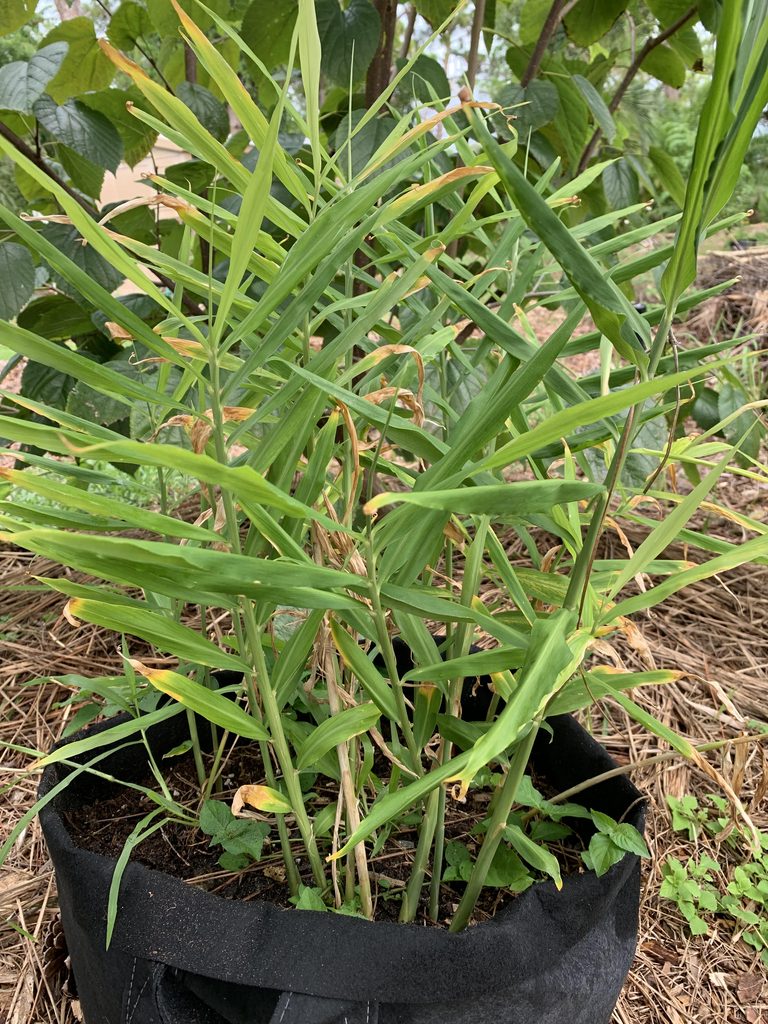
This year I decided to try growing both ginger and turmeric in pots. I experimented with several types of containers, including clay pots, plastic pots, and wooden barrels. Growing them in containers gives me much more control over both water and location because I can actually move the pots around. This has helped me find that sweet spot, and I am excited to see what kind of harvest we get in the fall.
For now, the ginger is happily growing underground where I can’t see what it’s doing—which is always a little frustrating for a gardener! 😂
🌸 Fun Fact
Ginger changes as it is dried and heated. Fresh ginger is especially rich in gingerols, while some of these compounds transform into shogaols during drying and heating. This helps explain why fresh and dried ginger can have noticeably different flavors, aromas, and properties.
📖 Materia Medica
Parts Used
Rhizomes
History & Traditional Uses
Ginger has been valued for thousands of years as both a food and a traditional herbal remedy. Ancient Greek, Roman, Middle Eastern, Indian, and Chinese traditions all recognized ginger as an important plant, and its value as a trade commodity helped carry it far beyond its native range.
In Traditional Chinese Medicine and Ayurveda, ginger has traditionally been valued as a warming herb and used to support digestion, circulation, and overall vitality. It has also been widely used for nausea, stomach discomfort, colds, and other common ailments.
Ginger’s reputation as a digestive and warming herb has continued into modern herbal practice, where it remains one of the world’s most familiar culinary and medicinal plants.
Constituents
Ginger contains a variety of naturally occurring plant compounds, including:
- Volatile oils
- Gingerols
- Shogaols
- Zingerone
- Paradols
- Diarylheptanoids
- Phenolic acids
- Proteolytic enzymes, including zingibain
- Polysaccharides
- Vitamins, minerals, and other naturally occurring compounds
Gingerols are especially abundant in fresh ginger and contribute to its characteristic pungent flavor. During drying or heating, some gingerols are converted into shogaols, which are generally more pungent.
Actions & Properties
Traditional herbal literature and modern research have associated or investigated a number of properties of Zingiber officinale, including:
- Antiemetic (helps reduce nausea and vomiting)
- Antimicrobial
- Antioxidant
- Antispasmodic
- Carminative (supports digestion and helps relieve gas)
- Anti-inflammatory
- Analgesic (pain-relieving)
- Circulatory stimulant
- Gastroprotective
These terms represent areas of traditional use and scientific investigation. The research section below provides more detail about the types of studies behind these findings.
🔬 Modern Research
Ginger is one of the more extensively researched culinary herbs, with human studies examining its potential effects on nausea, digestion, pain, inflammation, metabolic health, and other areas.
Importantly, research has used many different forms of ginger—including fresh ginger, dried ginger, powders, extracts, and supplements—so results from concentrated preparations do not necessarily translate directly to a cup of ginger tea. The following research provides a starting point for exploring what has been learned about ginger and its potential health benefits.
Orally Consumed Ginger and Human Health: An Umbrella Review
This umbrella review examined 24 systematic reviews looking at the effects of orally consumed ginger in humans.
The strongest evidence was found for ginger’s anti-nausea effects during pregnancy and its potential benefits for osteoarthritis pain. The review also found evidence suggesting possible benefits for menstrual pain, postoperative nausea, chemotherapy-related vomiting, blood sugar regulation, blood pressure, and other outcomes, although the strength of evidence varied considerably between conditions.
This is an especially useful resource because it brings together findings from many systematic reviews rather than looking at just one individual study.
Ginger’s Nutritional Implication on Gastrointestinal Health
This review examines the relationship between ginger and gastrointestinal health, including research involving nausea, indigestion, gastric emptying, and other digestive concerns.
Ginger’s traditional reputation as a digestive herb is one of the areas where modern research is particularly interesting, with studies exploring how ginger may influence gastrointestinal motility and other digestive processes.
Therapeutic Health Effects of Ginger (Zingiber officinale): Updated Narrative Review Exploring the Mechanisms of Action
This review explores the biological mechanisms that may help explain findings from human studies of ginger.
Researchers have investigated ginger’s potential effects on inflammation, pain, gastrointestinal function, blood pressure, blood sugar regulation, and nausea. The authors also distinguish between areas where human research is relatively promising and areas—such as antimicrobial, neuroprotective, anticancer, and liver- or kidney-protective effects—where additional human research is needed
Additional Research
Research into Zingiber officinale continues to expand, including studies of its individual compounds, traditional uses, culinary applications, and potential health properties. As I discover additional research and useful references I will continue adding them to this page.
⚠️ Safety
Ginger has a long history of use as both a food and traditional herbal beverage and is generally well tolerated by many people.
Some people may experience abdominal discomfort, heartburn, diarrhea, or irritation of the mouth or throat when consuming ginger, particularly in larger amounts.
Ginger’s effects on blood clotting and platelet activity have been investigated, but human research has produced mixed results. Anyone taking anticoagulant or antiplatelet medications, or anyone with a bleeding disorder, should discuss regular or concentrated ginger use with their healthcare provider rather than assuming that food or tea amounts have the same effects as concentrated extracts.
Ginger has also been studied for nausea during pregnancy, with evidence suggesting it may be helpful for mild pregnancy-related nausea. However, anyone who is pregnant should discuss regular medicinal or supplemental use with their healthcare provider.
As always, anyone who is nursing, has a chronic medical condition, or takes prescription medications should consult a qualified healthcare professional before regularly using concentrated herbal preparations.
🍵 Featured In
Leaves for Life, LLC currently uses dried ginger in one of our botanical infusions:
Digest & De-Stress
Calming comfort for bloated, full tummies, featuring moringa leaves and flowers, Jamaican cherry leaves, lemongrass, ginger, and cinnamon leaves.
Last Updated: [09/2026]