🌿 Botanical Information
Family: Moringaceae (horseradish tree family)
Botanical Name: Moringa oleifera
Common Names: Miracle Tree, Drumstick Tree, Horseradish Tree
Native Range: Northern India and surrounding regions of South Asia; now widely cultivated throughout tropical and subtropical regions
USDA Zones: 9–11; can be grown in cooler climates in containers and/or greenhouses
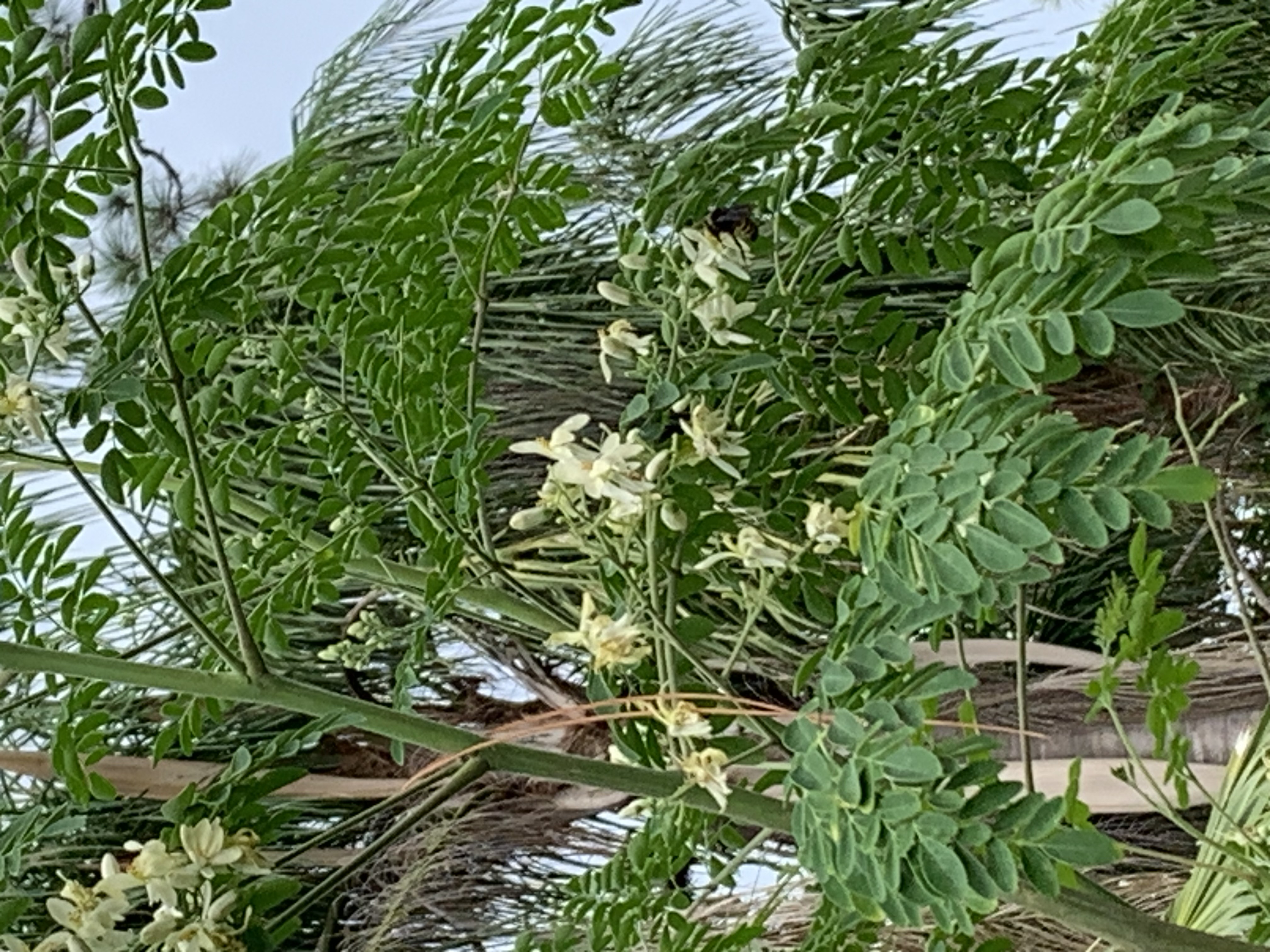
Moringa is a fast-growing, drought-resistant, deciduous tree that can reach approximately 35 feet. It thrives in tropical and subtropical climates. The flowers range from cream to white and are popular with pollinators. The flowers produce long, slender seedpods commonly called drumsticks.
Often called the “Miracle Tree,” nearly every part of the moringa tree has been used for food, traditional herbal preparations, and other purposes.
🌱 Growing in Our Food/Tea Forest
Moringa is an easy tree to grow here in SWFL and easy to use. The seeds germinate well, with almost all of them coming up quickly. They grow fast and actually seem to do better when pruned. We harvest moringa three or four times per year.
The flowers are a major attraction for pollinators, and I love watching the variety of bees and wasps come visit looking for food.
We also love eating the very young seed pods. When they are only about 8–10 inches long and still very flexible, we simply pop them off and sauté them for a nutritious, protein-packed vegetable that tastes a lot like asparagus. There are recipes for cooking the seeds once the pods get a little bigger, but we have never tried that.
If we leave the pods on the tree, they mature and eventually dry brown, leaving the seeds inside ready to plant more moringa trees. I think we’re up to about 15 trees currently!
🌸 Fun Fact
Moringa seeds have an unusual and fascinating use beyond food and herbal preparations: they can help purify water. Proteins in the seeds can bind to particles such as silt, clay, and some microorganisms, causing the particles to clump together and settle out of the water. This makes it easier to separate the clearer water from the sediment.
📖 Materia Medica
Parts Used
All parts (Leaves, Flowers, Seedpods, Bark & Roots)
For our botanical infusions we use the leaves and flowers.
History & Traditional Uses
Moringa oleifera has been cultivated and used as a food and traditional herbal plant for centuries. Nearly every part of the plant—including the leaves, pods, bark, flowers, seeds, and roots—has a history of traditional use.
Moringa is documented in Ayurvedic traditions and has been used for centuries in various traditional preparations for a wide range of purposes. Traditional uses have included support for digestive health, inflammation, metabolic health, energy, and general nourishment, among many others.
🥬 Food & Nutrition
Moringa is valued as both a traditional herbal plant and an important nutritional resource in many parts of the world.
The leaves contain protein, amino acids, dietary fiber, vitamins, minerals, carotenoids, and a variety of polyphenols and other plant compounds. Research has identified numerous nutrients and phytochemicals throughout the plant, although their concentrations can vary depending on the plant part, growing conditions, processing, and preparation.
Young leaves can be eaten fresh or cooked, while dried leaves are commonly used as a nutrient-rich ingredient or powder. Young seedpods are also eaten as a vegetable in many cuisines.
Constituents
Moringa contains a wide variety of naturally occurring plant compounds. Research has identified more than 90 compounds in the genus, including:
- Polyphenols
- Flavonoids
- Phenolic acids
- Glucosinolates
- Alkaloids
- Tannins
- Saponins
- Terpenes
- Carotenoids
- Proteins and amino acids
- Vitamins and minerals
- Other compounds currently being investigated
Notable flavonoids include quercetin, kaempferol, rutin, and catechin, while moringa also contains several glucosinolates and phenolic acids. The amounts and types of constituents can vary considerably depending on which part of the plant is used and how it is grown and processed.
Actions & Properties
Traditional herbal literature and modern research have associated or investigated a number of properties of Moringa oleifera, including:
- Antioxidant
- Anti-inflammatory
- Antimicrobial
- Antibacterial
- Antiviral
- Anxiolytic
- Anti-arrhythmic
- Antidiabetic
- Anticancer
Research has also investigated potential hepatoprotective and cardioprotective properties of various moringa preparations. These terms represent areas of traditional use and scientific investigation. The research section below provides more detail about the studies behind these findings.
🔬 Modern Research
Moringa is one of those plants that seems to have generated research in almost every direction—nutrition, phytochemistry, traditional medicine, agriculture, environmental applications, and potential therapeutic uses.
The research is extensive enough that rather than trying to list every study, this section highlights several comprehensive reviews that provide a good starting point for exploring the subject further.
Moringa oleifera: An Updated Comprehensive Review of Its Pharmacological Activities, Ethnomedicinal, Phytopharmaceutical Formulation, Clinical, Phytochemical, and Toxicological Aspects
This extensive review brings together research on moringa’s traditional uses, phytochemical composition, pharmacological activity, clinical studies, and toxicology. It discusses compounds found throughout different parts of the plant and reviews research into antioxidant, anti-inflammatory, antimicrobial, hepatoprotective, cardioprotective, and other activities.
The review is particularly useful because it looks at both the potential benefits of moringa and the safety and toxicity literature, providing a broad picture of where research currently stands.
Exploring the Phytochemical, Pharmacological and Nutritional Properties of Moringa oleifera: A Comprehensive Review
This review takes a particularly interesting look at moringa as both a nutritional and medicinal plant. It examines its proteins, amino acids, vitamins, minerals, flavonoids, phenolic acids, glucosinolates, carotenoids, and other constituents, along with research into their potential biological activities.
One of the things I find most interesting about this review is the reminder that the nutritional and medicinal qualities of moringa are closely connected to the plant’s diverse chemistry. It also notes that constituent levels can vary depending on growing conditions and other factors.
A Comprehensive Review of the Phytochemicals, Health Benefits, Pharmacological Safety and Medicinal Prospects of Moringa oleifera
This review focuses on moringa’s diverse phytochemical composition and the potential health applications being investigated for those compounds. It covers antioxidant, anti-inflammatory, antimicrobial, antidiabetic, anticancer, and cardioprotective activity, while also examining pharmacological safety and nutritional importance.
It provides another useful perspective on why moringa continues to attract scientific interest and where additional research is still needed.
Additional Research
Research into Moringa oleifera continues to expand, including studies of its individual compounds, traditional uses, culinary applications, and potential health properties. As I discover additional research and useful references I will continue adding them to this page.
⚠️ Safety
Moringa leaves and flowers have a long history of use as food and traditional preparations. For our purposes, it is important to distinguish the commonly consumed leaves and flowers from concentrated extracts and from other parts of the plant, which can have different chemical constituents and safety considerations.
Digestive upset: Some people may experience digestive discomfort when consuming moringa, particularly in larger amounts.
Blood sugar and blood pressure: Moringa has been investigated for effects on blood glucose and blood pressure. Those taking medications for either condition should discuss regular or concentrated moringa use with their healthcare professional.
Thyroid conditions: If you have a thyroid condition or take thyroid medication, discuss regular or concentrated moringa use with your healthcare professional. Research in this area is not yet conclusive enough to establish a general rule for everyone with a thyroid condition.
Pregnancy: Because some experimental research has raised concerns about reproductive effects from certain moringa preparations, pregnant individuals should avoid medicinal or concentrated moringa preparations unless specifically advised by their healthcare professional.
As with any herbal product, anyone with a chronic medical condition, who takes prescription medications, or who is pregnant or nursing should consult a qualified healthcare professional before using concentrated herbal preparations regularly.
🍵 Featured In
Leaves for Life, LLC currently uses moringa leaves and flowers in several of our botanical infusions:
Mighty Moringa
All by its beautiful self! Enjoy moringa as a loose-leaf botanical infusion or in our microplastic-free, all-cotton tea bags.
Moringa with Elderberries
Moringa leaves blended with heat-dried elderberries.
Moringa Mulberry
A delightful blend of moringa and mulberry leaves.
Digest & De-Stress
Calming comfort for bloated, full tummies, featuring moringa leaves and flowers, Jamaican cherry leaves, lemongrass, ginger, and cinnamon leaves.
Last Updated: [09/2026]