🌿 Botanical Information
Family: Poaceae (grass family)
Botanical Name: Cymbopogon citratus
Common Names: Lemongrass, Fever Grass
Native Range: South Asia and Maritime Southeast Asia
USDA Zones: 9–11, where it can grow as a perennial. In colder climates, it is typically grown as an annual.
An aromatic herb with a long history of culinary and traditional use, lemongrass is valued for its refreshing citrus flavor and fragrance.
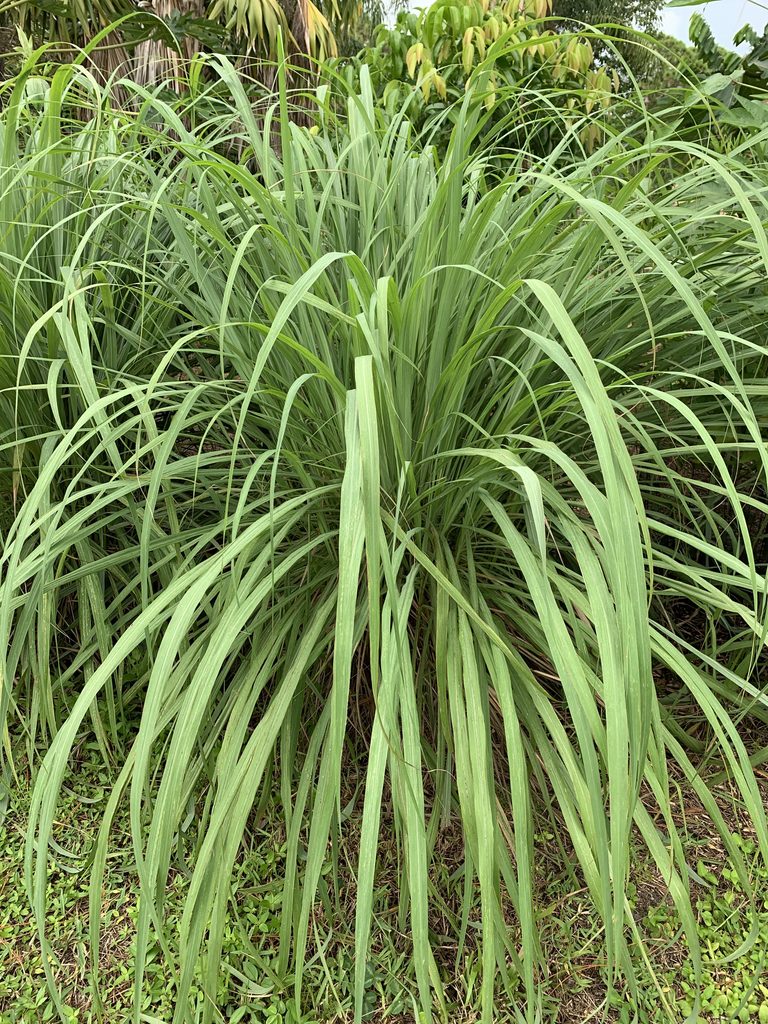
Lemongrass is a tall, perennial grass with slender, blue-green leaves that droop at the tips and release a strong lemony scent when crushed or damaged. It grows in dense clumps that can reach approximately 2–4 feet tall.
🌱 Growing in Our Food/Tea Forest
Lemongrass is another easy plant to grow here in SWFL. It grows readily from seed or by dividing established clumps.
The leaves can be harvested throughout the growing season and are usually chopped back almost to the ground in the fall, or sometimes first thing in spring. It makes a great filler for borders or empty spaces and is really quite carefree, so it is welcome in just about any part of our food forest.
🌸 Fun Fact
Lemongrass gets its distinctive lemony aroma primarily from citral, a natural mixture of two aromatic compounds called geranial and neral.
The essential oil has also been studied for its insect-repellent properties, which has led to lemongrass being used in everything from household products to natural insect-repellent preparations.
📖 Materia Medica
Parts Used
Leaves & Stems
For the purposes of our botanical infusions, we use the leaves.
History & Traditional Uses
Lemongrass has been used in Southeast Asia for centuries in cooking, traditional remedies, and cultural practices. Thai, Vietnamese, Indian, and Sri Lankan cuisines each have their own traditions for using this fragrant herb. As global trade expanded, lemongrass spread throughout Asia, Africa, Europe, the Caribbean, and the Americas, where it became established in many tropical and subtropical regions.
In Caribbean and Southeast Asian folk traditions, lemongrass was often prepared as a tea traditionally known as “fever grass” and used during times of fever, colds, and general illness. It has also been traditionally used to support digestion and provide a calming, refreshing beverage. In Ayurvedic and Thai traditions, lemongrass has been used in preparations intended to support digestion, soothe the nervous system, and promote overall balance.
Today, lemongrass is enjoyed around the world as a culinary herb, aromatic plant, and traditional herbal tea.
🍋 Food & Culinary Use
Lemongrass is an important culinary herb throughout Southeast Asia and is especially well known in Thai, Vietnamese, Indonesian, and other regional cuisines.
The lower portions of the fresh stalk are commonly used to flavor soups, curries, sauces, marinades, and rice dishes. The leaves have a lighter, more delicate lemon flavor and are particularly enjoyable when infused into teas and other beverages.
Its bright citrus flavor makes lemongrass a wonderful companion to other herbs and spices, which is one reason we enjoy using it in our own botanical blends.
Constituents
Lemongrass contains a variety of naturally occurring plant compounds, including:
- Essential oils, particularly citral (geranial and neral)
- Flavonoids
- Phenolic compounds
- Terpenes
- Saponins
- Tannins
- Chlorogenic acid
- Other compounds currently being investigated
The essential oil composition can vary depending on growing conditions, plant maturity, and the part of the plant used.
Actions & Properties
Traditional herbal literature and modern research have associated or investigated a number of properties of Cymbopogon citratus, including:
- Antioxidant
- Antimicrobial
- Antibacterial
- Antifungal
- Anti-inflammatory
- Digestive
- Mildly calming
- Antinociceptive (related to the perception of pain)
- Metabolic support
These terms represent areas of traditional use and scientific investigation. The research section below provides more detail about the types of studies behind these findings.
🔬 Modern Research
Lemongrass has been studied for its nutritional value, essential-oil chemistry, traditional uses, and a wide range of potential biological activities. Much of the research involves extracts or essential oils rather than the simple tea preparations people traditionally make from the leaves.
The research below provides a starting point for exploring what scientists have learned about Cymbopogon citratus, including its phytochemical composition, digestive and metabolic properties, antimicrobial activity, and potential effects on the nervous system.
Nutritional and Nutraceutical Potentials of Lemongrass
This review examines the nutritional value, phytochemical composition, and potential health-related applications of lemongrass. It discusses compounds such as flavonoids, phenolic compounds, and essential oils and explores research into antioxidant, antimicrobial, anti-inflammatory, and other biological activities.
Lemongrass in Traditional Chinese Medicine
This resource explores lemongrass from the perspective of Chinese Nutrition and Traditional Chinese Medicine, including its traditional properties, energetic characteristics, and historical uses.
Phytochemical Composition and Pharmacological Potential of Lemongrass (Cymbopogon) and Impact on Gut Microbiota
This review examines the phytochemicals found in lemongrass and related Cymbopogon species and explores research into their antioxidant, antimicrobial, anti-inflammatory, metabolic, and nervous-system-related properties.
The paper also examines the potential relationship between lemongrass compounds and the gut microbiota, an area of research that is becoming increasingly interesting.
Additional Research
Research into Cymbopogon citratus continues to expand, including studies of its individual compounds, traditional uses, culinary applications, and potential health properties. As I discover additional research and useful references I will continue adding them to this page.
⚠️ Safety
Lemongrass has a long history of use as a food and beverage ingredient and is generally well tolerated when consumed in normal culinary or tea amounts. However, concentrated extracts and essential oils are much stronger preparations than a traditional herbal infusion and should not be considered equivalent.
Lemongrass has traditionally been described as having uterine-stimulating properties, so medicinal or concentrated amounts are generally avoided during pregnancy.
Anyone who is pregnant or nursing, has a chronic medical condition, or takes prescription medications should consult a qualified healthcare professional before regularly using concentrated herbal preparations.
🍵 Featured In
Leaves for Life, LLC currently uses lemongrass leaves in several of our botanical infusions:
Digest & De-Stress
Calming comfort for bloated, full tummies, featuring moringa leaves and flowers, Jamaican cherry leaves, lemongrass, ginger, and cinnamon leaves.
Inflam-Ease
A warming, spiced hibiscus blend traditionally enjoyed for soothing comfort when the body is feeling achy or inflamed, featuring Jamaican cherry leaves, cranberry hibiscus, white roselle hibiscus, lemongrass, katuk, papaya leaves, and cinnamon leaves.
Last Updated: [09/2026]