🌿 Botanical Information
Family: Lauraceae (laurel family; includes avocado and bay laurel)
Botanical Name: Cinnamomum verum
Formerly: Cinnamomum zeylanicum
Common Names: Ceylon Cinnamon, Sri Lanka Cinnamon, True Cinnamon
Native Range: Sri Lanka
USDA Zones: 9–11; prefers warm, humid conditions and can be damaged by temperatures in the 40’s
Ceylon cinnamon, often called “true cinnamon,” is a small evergreen tree native to Sri Lanka. The familiar cinnamon spice is traditionally made from the inner bark of the tree, which is carefully harvested, dried, and rolled into the familiar cinnamon sticks.
Ceylon cinnamon is different from the related cassia cinnamons, which include species commonly cultivated in China, Vietnam, and Indonesia and are also sold simply as “cinnamon.” The two types have different flavors, chemistry, and culinary characteristics.
🌱 Growing in Our Food/Tea Forest
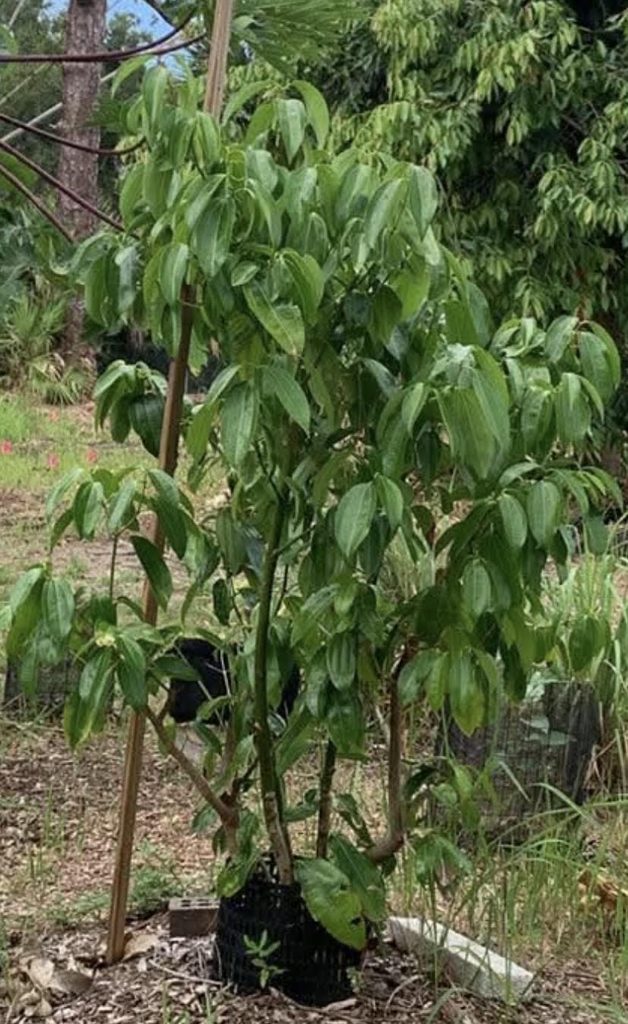
Cinnamon is an easy tree to grow during the warm months here in SWFL, although the winters can become a little worrisome. Our trees can suffer leaf damage when temperatures drop into the 40s, and colder temperatures can cause much more serious damage.
Although cinnamon is traditionally harvested for its inner bark, our trees are still young, so for now we harvest the leaves instead. The leaves are still spicy and pungent, but their flavor is noticeably different from cinnamon bark. They have a wonderful warming quality and make a surprisingly flavorful addition to herbal infusions.
We currently have seven cinnamon trees. As our trees mature, we may eventually experiment with harvesting the bark as well, but for now we’re happy to let our young trees grow!
🌸 Fun Fact
The same cinnamon tree can produce very different aromatic compounds depending on which part is used.
Cinnamon bark is especially rich in cinnamaldehyde, the compound strongly associated with the familiar cinnamon aroma and flavor. Cinnamon leaves are particularly rich in eugenol, the same aromatic compound that gives cloves their characteristic scent. Research examining C. verum leaf essential oils has found eugenol to be one of the predominant constituents, although the exact composition can vary between plants and growing locations.
So, although they come from the same tree, cinnamon bark and cinnamon leaves are chemically—and aromatically—a little different.
📖 Materia Medica
Parts Used
Leaves & Bark
The leaves are the part we currently harvest and use in our botanical infusions.
History & Traditional Uses
Cinnamon has a surprisingly dramatic past.
Ancient Egyptians valued cinnamon for ritual purposes, embalming, and traditional medicinal preparations. For centuries, cinnamon was an extremely valuable spice, and traders went to great lengths to protect the source of their supply. Stories were even told about cinnamon being gathered from birds’ nests to keep its origins secret.
Ceylon cinnamon eventually became an important commodity in Sri Lanka, with Portuguese, Dutch, and British powers competing for control of the cinnamon trade.
Cinnamon has also been valued in traditional herbal systems for centuries. In Traditional Chinese Medicine, cinnamon is considered a warming spice traditionally used to support digestion and circulation. It has also been used in Ayurvedic traditions for digestive and metabolic support.
Because cinnamon has such a long culinary history, it is a wonderful example of a plant that can be both food and herbal medicine, depending on how it is used.
🍎 Food & Culinary Use
Cinnamon is one of the world’s best-known culinary spices and has been used in foods and beverages for thousands of years. Ceylon cinnamon has a sweeter, lighter, more delicate flavor than many cassia varieties, making it especially enjoyable in teas, desserts, fruit dishes, and savory recipes.
The leaves of Cinnamomum verum are also used traditionally in some culinary and herbal preparations. Although they do not taste exactly like cinnamon bark, they have a warm, aromatic, slightly spicy flavor that makes them particularly interesting for herbal infusions.
Constituents
Cinnamon contains a wide variety of naturally occurring plant compounds. The exact chemical profile varies depending on the plant part, growing conditions, and preparation. The compounds include:
- Eugenol — a major constituent of Ceylon cinnamon leaf essential oil
- Cinnamaldehyde
- Linalool
- Cinnamyl acetate
- Caryophyllene
- Phenolic compounds
- Tannins
- Flavonoids
- Mucilage
- Other aromatic and non-volatile compounds
One particularly interesting distinction is that the leaves and bark have different dominant aromatic compounds. Eugenol is especially prominent in the leaf oil, while cinnamaldehyde is much more characteristic of the bark.
Actions & Properties
Traditional herbal literature and modern research have associated or investigated a number of properties of Cinnamomum verum, including:
- Warming
- Digestive
- Antioxidant
- Antimicrobial
- Antibacterial
- Antifungal
- Antiviral
- Anti-inflammatory
- Blood-sugar regulating
- Mild emmenagogue
The research into cinnamon’s biological activity includes many different plant parts and preparations. The research section below focuses particularly on what has been investigated in Ceylon cinnamon leaves and leaf-derived compounds, since leaves are the part we currently use.
🔬 Modern Research
Cinnamon has been extensively studied, but much of the research focuses on the bark, bark extracts, or isolated compounds rather than the leaves. Because we harvest and use the leaves of our young trees, I have focused the research below as much as possible on Cinnamomum verum leaves and leaf chemistry.
This distinction is important because the chemical composition of cinnamon leaves is different from that of the bark. In particular, Ceylon cinnamon leaf oil is often rich in eugenol, while bark oil is more strongly associated with cinnamaldehyde.
Phytochemical and Pharmacological Review of Cinnamomum verum J. Presl — A Versatile Spice Used in Food and Nutrition
This comprehensive review examines the botany, traditional uses, nutritional qualities, phytochemical composition, pharmacological properties, and safety of Ceylon cinna
It discusses compounds including cinnamaldehyde, eugenol, cinnamic acid, linalool, and cinnamyl acetate, along with research into antioxidant, antimicrobial, anti-inflammatory, metabolic, and other biological activities.
Although much of the research summarized involves different parts and preparations of the plant, this review provides an excellent foundation for understanding the chemistry and traditional uses of C. verum.
Chemical Composition of Cinnamomum verum Leaf and Flower Essential Oils and Analysis of Their Antibacterial, Insecticidal, and Larvicidal Properties
This study specifically examined Ceylon cinnamon leaves and flowers, making it particularly relevant to our use of the leaves.
Researchers identified several aromatic compounds in the leaf essential oil, including cinnamaldehyde, eugenol, linalool, and cinnamyl acetate. They also investigated antibacterial and other biological activities of the leaf and flower oils.
The study found that the leaf oil demonstrated antibacterial activity against several tested bacterial strains and showed potential insecticidal and larvicidal activity.
Essential Oil Chemotypes and Genetic Variability of Cinnamomum verum Leaf Samples
This research is particularly interesting because it demonstrates that not all Ceylon cinnamon leaves have exactly the same chemical profile.
Eugenol was the predominant compound in many of the leaf samples studied, but researchers also found significant variation between plants and growing locations. Some samples contained much higher levels of benzyl benzoate and other compounds.
This is a good reminder that the chemistry of a plant is influenced by genetics, geography, growing conditions, and other factors.
Additional Research
Research into Cinnamomum verum continues to expand, including studies of its individual compounds, traditional uses, culinary applications, and potential health properties. As I discover additional research and useful references—particularly research involving the leaves—I will continue adding them to this page.
⚠️ Safety
Cinnamon has a long history of culinary use, and the amounts normally used as a food or flavoring are quite different from concentrated extracts or essential oils.
Ceylon vs. cassia: One important distinction is that Ceylon cinnamon generally contains much less coumarin than cassia cinnamon. Coumarin is a naturally occurring compound that can be a concern with high or prolonged intake, particularly for the liver. This is one reason the distinction between the two types of cinnamon matters.
Pregnancy: Cinnamon has traditionally been described as having emmenagogue properties, but the evidence and safety of medicinal or concentrated amounts during pregnancy are not well established. Because of this, pregnant individuals should avoid concentrated cinnamon preparations unless advised otherwise by their healthcare professional.
Anyone else who has a chronic medical condition, or takes prescription medications should consult a qualified healthcare professional before regularly using concentrated herbal preparations.
🍵 Featured In
Leaves for Life, LLC currently uses cinnamon leaves in several of our botanical infusions:
Digest & De-Stress
Calming comfort for bloated, full tummies, featuring moringa leaves and flowers, Jamaican cherry leaves, lemongrass, ginger, and cinnamon leaves.
Inflam-Ease
Featuring Jamaican cherry leaves, cranberry hibiscus, white roselle hibiscus, lemongrass, katuk, papaya leaves, and cinnamon leaves. A warming, spiced hibiscus blend traditionally enjoyed for soothing comfort when the body is feeling achy or inflamed.
Last Updated: [09/2026]