🌿 Botanical Information
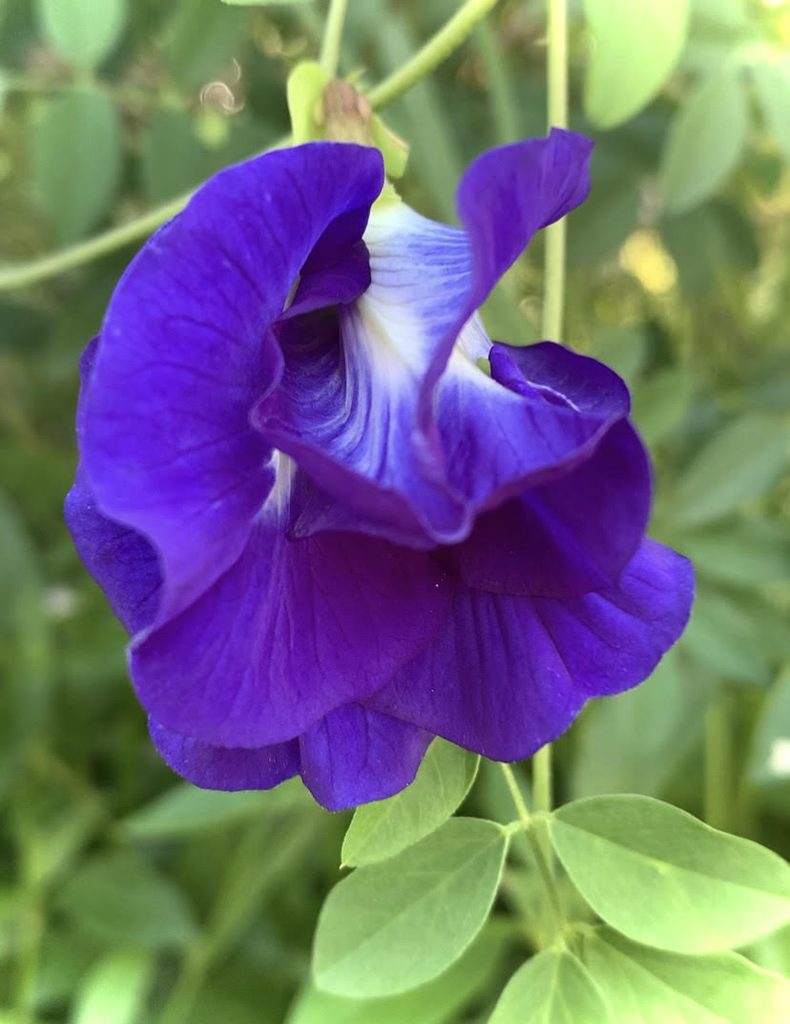
Family: Fabaceae (pea family)
Botanical Name: Clitoria ternatea
Common Names: Butterfly Pea, Blue Pea, Asian Pigeonwings
Native Range: South and Southeast Asia
USDA Zones: 10–12; can be grown as an annual in cooler climates
Butterfly pea is a tropical, perennial climbing vine that can reach approximately 15 feet. Throughout the warm season, it produces an abundance of beautiful flowers in shades of vibrant blue, purple-blue, pink, light blue, and white. Both single- and double-flowered varieties are available.
The flowers are edible and are particularly valued for their naturally intense blue color. Butterfly pea flower extract is also used as a natural food colorant, and the FDA has approved butterfly pea flower extract as a color additive for specified food uses.
🌱 Growing in Our Food/Tea Forest
Butterfly pea is one of my favorite flowers to grow!
It is a beautiful vining plant that grows lush and full during the summer here in our Southwest Florida climate. Every day, the vines produce an abundance of double-bloomed, dark blue-purple flowers—and ours are definitely double-bloomed! We can pick them all one day and the next day they are slap-covered again!
Although it is called Butterfly Pea, the flowers don’t seem to be especially popular with pollinators. Every once in a while we’ll catch a bee checking them out, but it’s not common. Because of this, we don’t feel too guilty harvesting the flowers daily. A few are bound to go unnoticed and eventually produce seed pods, giving us another generation of plants.
The flowers are edible when fresh, and it’s hard not to pop at least one in our mouths while we’re harvesting. They have a slightly creamy texture with a little spice at the end.
The young plants are a favorite of our rabbits, who will happily nibble them down to stubs! We have to keep them caged until they get much bigger—at least for a couple of years, really.
We also had a real scare this year during a severe drought. Some little critter—we suspect a squirrel or possibly a native palm rat—was chewing on the branches, probably trying to get some moisture. With a vining plant, damage to a small stem can cause the growth farther down the vine to die.
But, as is so often the case, we should trust nature. When the rains finally returned, the plants exploded with new growth. All those chopped-up vines essentially acted like pruning, and the plants came back fuller and healthier than ever. They actually look better now than they did before the drought!
🌸 Fun Fact
Add an acidic ingredient such as lemon, lime or even honey, to butterfly pea tea and watch the color change almost instantly. The change in acidity shifts the anthocyanin pigments, transforming the brilliant blue into shades of violet and purple right before your eyes.
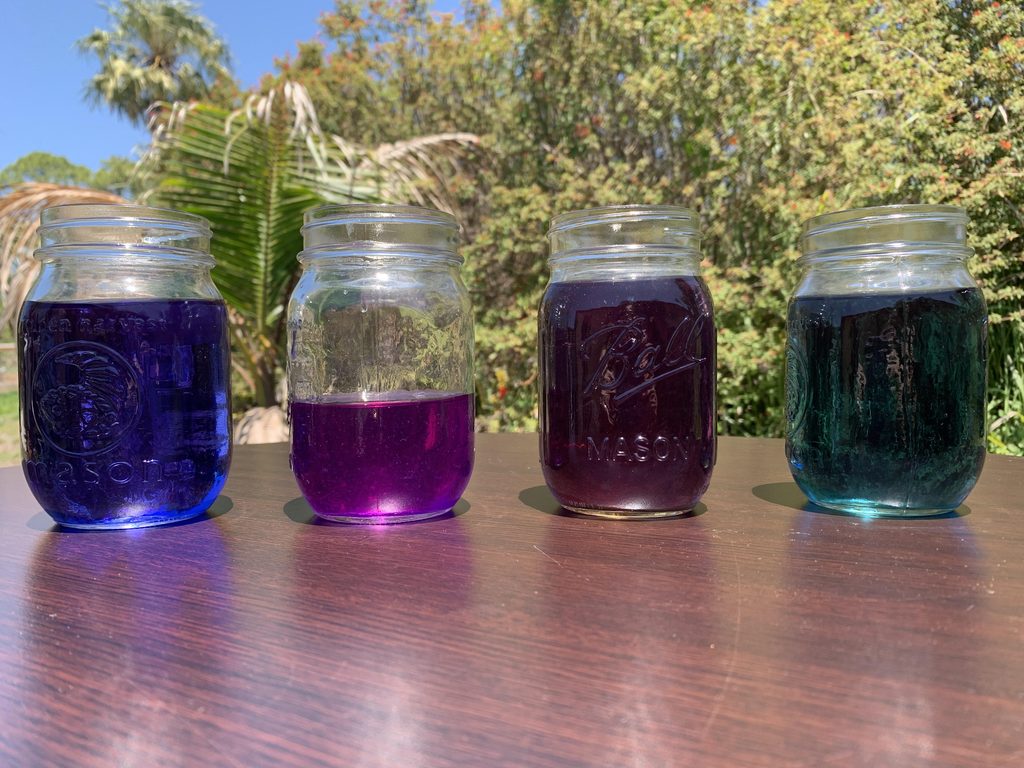
It’s a fun little bit of plant chemistry that never gets old!
📖 Materia Medica
Parts Used
Flowers
History & Traditional Uses
Butterfly pea has a long history of use throughout South and Southeast Asia. The plant has been cultivated for a variety of purposes, including forage and fodder, food coloring, and traditional herbal preparations.
In many Asian cultures, the vibrant blue flowers are used to naturally tint foods and beverages, particularly for special occasions. The beautiful color has also been associated in some traditions with prosperity, good fortune, hospitality, and respect.
Clitoria ternatea has a long history of use in Ayurvedic traditions and is known by several traditional names, including Shankhpushpi. Butterfly pea flower is also commonly prepared as Anchan tea, a vibrant blue herbal infusion enjoyed throughout Thailand and other parts of Southeast Asia.
Traditional uses of the plant have included preparations associated with cognition, inflammation, metabolic health, and general wellness.
Constituents
Butterfly pea contains a variety of naturally occurring plant compounds, including:
- Ternatins and other delphinidin-derived anthocyanins — responsible for much of the flower’s intense blue coloration
- Other anthocyanins
- Flavonoids
- Saponins
- Alkaloids
- Tannins
- Phenolic compounds
- Proteins and peptides
- Other compounds currently being investigated
The distinctive blue color of butterfly pea is largely associated with its anthocyanin content, particularly the ternatins, a group of polyacylated anthocyanins.
Actions & Properties
Traditional herbal literature and modern research have associated or investigated a number of properties of Clitoria ternatea, including:
- Antioxidant
- Anti-inflammatory
- Neuroprotective
- Anxiolytic
- Hepatoprotective
- Antidiabetic
- Anti-obesity
- Anticancer
These terms represent areas of traditional use and scientific investigation. The research section below provides more detail about the types of studies behind these findings.
🔬 Modern Research
Scientific interest in Clitoria ternatea has grown considerably, with researchers investigating its plant compounds, antioxidant activity, potential metabolic effects, neuroprotective properties, natural food-coloring applications, and other possible uses.
Clitoria ternatea: Perspectives on Its Application in Foods and Potential Health Benefits
This 2025 review examines the current scientific literature surrounding C. ternatea, including its potential applications as a natural colorant and functional food ingredient, as well as research into antioxidant, antidiabetic, anti-obesity, hepatoprotective, and anticancer activities.
The review highlights butterfly pea as a versatile plant with potential applications across food, pharmaceutical, cosmetic, and other industries, while emphasizing the continued development of research in these areas.
Butterfly Pea (Clitoria ternatea), a Cyclotide-Bearing Plant With Applications in Agriculture and Medicine
This comprehensive review explores the chemistry, biology, agricultural uses, and medicinal potential of C. ternatea, including its unusual cyclotides and other constituent compounds.
The authors discuss the plant’s diverse potential applications and suggest that continued research may lead to additional discoveries and future uses for compounds derived from butterfly pea.
Butterfly Pea Flower Benefits, Uses, Nutrition and Side Effects
Dr. Axe provides an accessible overview of butterfly pea, including historical references, commonly discussed properties, potential benefits, and an example of how to prepare the flower as a tea.
Additional Research
Research into Clitoria ternatea continues to expand, including studies of its individual compounds, traditional uses, culinary applications, and potential health properties. As I discover additional research and useful references I will continue adding them to this page.
⚠️ Safety
Butterfly pea flower has a history of use as a food and beverage ingredient and is generally well tolerated when consumed as a food or traditional beverage.
Because research on concentrated extracts and long-term use is still developing, anyone who is pregnant or nursing, has a chronic medical condition, or takes prescription medications should consult a qualified healthcare professional before regularly using herbal products or concentrated extracts.
🍵 Featured In
Leaves for Life, LLC currently uses butterfly pea flowers in several of our botanical infusions:
Butterfly Pea-licious
All by its beautiful self! Enjoy butterfly pea flower as a loose-leaf botanical infusion or in our microplastic-free, all-cotton tea bags. Watch the brilliant blue color transform into beautiful shades of purple when you add an acidic ingredient such as lemon.
Mango Pea-licious
Butterfly pea flowers blended with the leaves of our mango trees.
Calm Clari-Tea
A delightful blend of butterfly pea flowers, mulberry leaves and Lippia alba.
Last Updated: [09/2026]