🌿 Botanical Information
Family: Asteraceae (Compositae)
Botanical Name: Solidago odora (many different varieties; this is what we have)
Common Names: Sweet goldenrod, Anise goldenrod, anise-scented goldenrod, and licorice goldenrod.
Native Range: Eastern and southeastern United States, from New England south to Florida and west into parts of the central and south-central United States, including Missouri, Oklahoma, and Texas. It is native to Florida.
USDA Zones: Commonly listed for zones 4–9. Florida-friendly references also list it for zones 8b–11, reflecting its suitability for warmer climates.
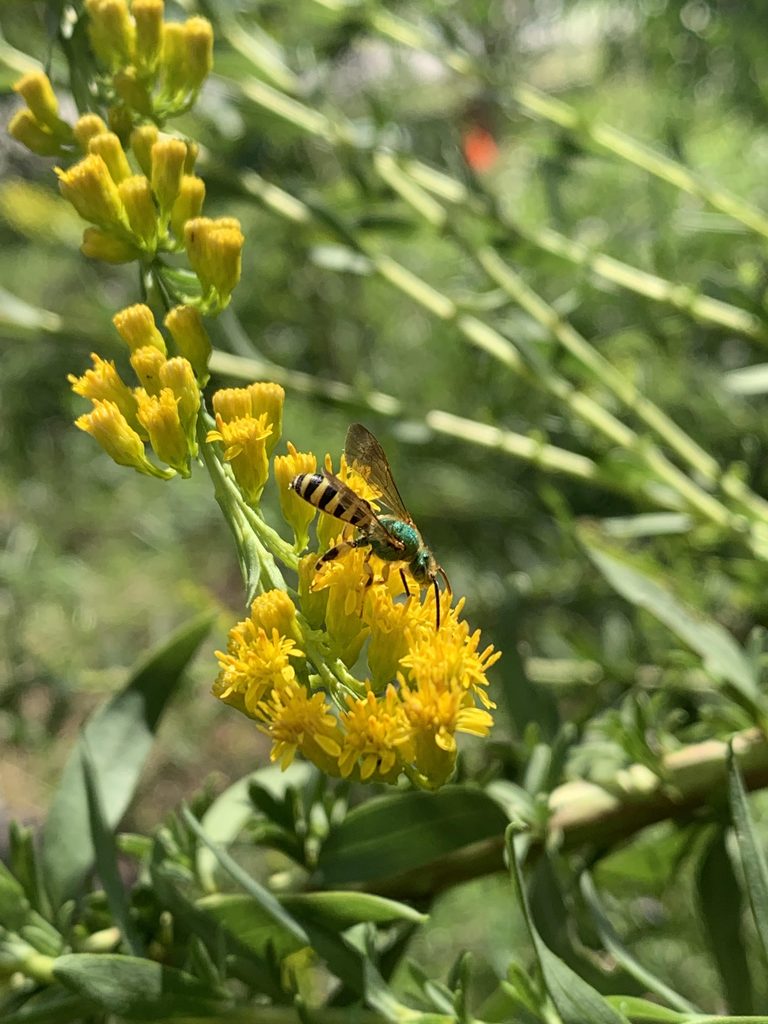
Sweet goldenrod (Solidago odora) is a native North American perennial wildflower known for its bright yellow flower clusters and pleasantly aromatic leaves. It is a clump-forming, herbaceous perennial wildflower that typically grows about 1–3 feet tall. Unlike many other goldenrod species, its leaves release a distinctive sweet, anise-like scent when crushed, earning it common names such as anise-scented and licorice goldenrod. Blooming in late summer and fall, it provides a valuable source of nectar for pollinators. Sweet goldenrod also has a history of traditional use as an herbal tea, making it an interesting addition to both native plant gardens and botanical collections.
🌱 Growing in Our Food/Tea Forest
I planted it on a bit of a whim, and it seems to really like my garden! It reseeds itself and spreads gradually. The tall flower spikes provide a nice contrast to the many bushy plants in the garden, and the clusters of yellow are such a pretty sight in early fall.
I’m not the only one in the garden happy to see those blooms—the pollinators are, too! It’s always a give-and-take in my garden. As much as I’d love to harvest every last little flower for our teas, I always leave some on the plant, not only for the bees and wasps but also to ensure a new generation of plants. It’s all part of keeping the garden sustainable and regenerative.
🌸 Fun Fact
Goldenrod Gets a Bad Rap!
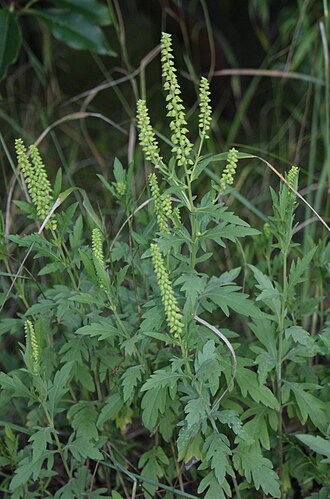
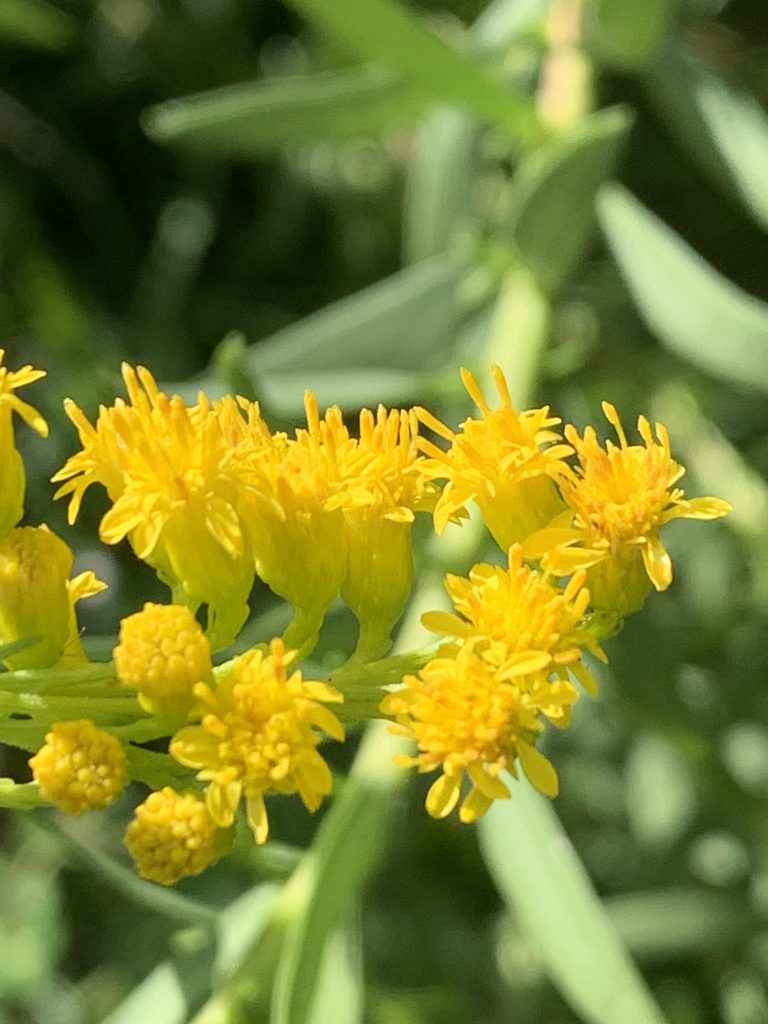
Goldenrod is often blamed for the sneezing and sniffles that arrive in late summer and fall, but ragweed is usually the bigger culprit! Although both bloom around the same time, goldenrod’s heavy, sticky pollen is primarily carried by insects, while ragweed releases lightweight pollen that travels on the wind. Goldenrod also has a long history in Western herbalism, where it is valued for its astringent properties and traditional use in supporting mucous membranes and calming inflammation. Some scientific studies have found promising anti-inflammatory activity in goldenrod extracts, although more research is needed to establish their benefits in people. This golden beauty may have more to offer than meets the eye!
📖 Materia Medica
Parts Used
Leaves & Flowers
Note: Some traditional uses have used the root, but here at Leaves for Life, we use the aerial parts: leaves & flowers.
History & Traditional Uses
The botanical name Solidago is commonly interpreted as deriving from Latin roots meaning “to make whole,” reflecting goldenrod’s long-standing reputation as a healing plant. For centuries, various Indigenous peoples of North America have used different goldenrod species in traditional herbal practices. Sweet goldenrod (Solidago odora), in particular, has a history of use among the Cherokee, including traditional preparations made from its leaves and roots. Its aromatic leaves have also been brewed into herbal tea.
Goldenrod has a place in American history, too! During the Revolutionary War, colonists turned to locally available plants, including goldenrod, to make “Liberty Tea” as an alternative to imported British tea. In some folk traditions, goldenrod has also been associated with prosperity, good fortune, and divination. These varied histories reflect the plant’s importance not only as a wildflower but also as a source of traditional remedies, everyday beverages, and cultural symbolism.
🥬 Food & Nutrition
Sweet goldenrod has a history of use as an herbal tea, valued for its aromatic leaves and naturally occurring plant compounds. While it is not widely studied as a nutritional food source, its leaves contain naturally occurring volatile oils, flavonoids, phenolic acids, and other phytochemicals.
Its aromatic oils contribute to the plant’s distinctive sweet fragrance, while the types and concentrations of these compounds can vary depending on the species, plant part, growing conditions, and stage of growth.
Constituents
Goldenrod species contain a variety of naturally occurring plant compounds, including:
- Flavonoids, a group of plant compounds studied for their antioxidant and other biological activities
- Phenolic acids and phenolic glycosides
- Saponins
- Terpenoids, including diterpenes and volatile oil constituents
Notable flavonoids include quercetin, rutin, and astragalin. The chemical composition of goldenrod varies among species and may also differ according to the plant part, growing conditions, and processing methods. Compounds identified in one goldenrod species should not automatically be assumed to occur in the same amounts—or at all—in another species.
Actions & Properties
Traditional herbal literature and modern laboratory research have associated or investigated various properties of goldenrod species, including:
- Anti-inflammatory
- Astringent
- Diuretic
- Expectorant
- Spasmolytic (antispasmodic)
- Vulnerary (traditionally used to support skin and tissue healing)
Some goldenrod species have also been investigated for antimicrobial and other biological activities. Research into possible effects on allergic and inflammatory responses is ongoing. These terms represent areas of traditional use and scientific investigation. The research section below provides more detail about the studies behind these findings.
🔬 Modern Research
Goldenrod has a long history of traditional use, and modern research is exploring the chemical constituents and biological activities of several Solidago species. Studies have investigated potential anti-inflammatory, antimicrobial, and other effects, primarily in laboratory and animal models. Although these findings offer interesting avenues for further research, more human studies are needed to understand their relevance to traditional herbal preparations, including tea made from sweet goldenrod.
Solidago virgaurea L: A Review of its Ethnomedicinal Uses, Phyochemistry, & Pharmacological Activities
This review examines the traditional uses, chemical constituents, and scientific research on European goldenrod (Solidago virgaurea). It discusses studies investigating antioxidant, anti-inflammatory, antimicrobial, diuretic, and other biological activities. The authors note that many promising findings come from laboratory and animal studies, and further research is needed to establish their relevance to human health.
Although this review focuses on European goldenrod, it provides useful background on the traditional uses and scientific study of the broader Solidago genus.
Phytochemical & Pharmacological Research in Galenic Remedies of Solidago canadensis L. Herb
This study investigated the chemical composition and potential anti-inflammatory activity of preparations made from Goldenrod (Solidago canadensis). Researchers identified a variety of plant compounds, including flavonoids, phenolic acids, and volatile oil constituents. In experimental testing, the extracts showed anti-inflammatory activity, including reductions in measures associated with tissue swelling.
Anti-inflammatory Evaluation of Solidago chilensis Meyen in a Murine Model of Pleurisy
This study investigated the anti-inflammatory effects of water-based extracts made from the roots (rhizomes), leaves, and flowers of Solidago chilensis in mice. The researchers found that the extracts reduced several indicators of inflammation, including the movement of inflammatory cells into affected tissues. Some preparations also reduced responses associated with inflammatory substances such as histamine.
Extracts of the Canadian goldenrod (Solidago Canadensis L.) – promising agents with antimicrobial, anti-inflammatory and hepatoprotective activity
This study examined extracts of Canadian goldenrod (Solidago canadensis) for antimicrobial, anti-inflammatory, and potential liver-protective activities. The researchers investigated the plant’s chemical constituents and found that some extracts demonstrated anti-inflammatory activity in experimental models. Other tests suggested moderate protective effects in a model of chemically induced liver injury.
As I discover additional research and useful references, I will continue adding them to this page.
⚠️ Safety
Sweet goldenrod (Solidago odora) has a history of use as an herbal tea, but scientific information about its safety in humans is limited. Safety findings for other goldenrod species may not apply directly to sweet goldenrod.
Plant identification: Make sure the plant has been correctly identified before harvesting it for tea. Several goldenrod species look similar, and other unrelated plants may resemble them. Do not rely on flower color or fragrance alone when identifying an unfamiliar plant.
Allergies: Goldenrod belongs to the Asteraceae (daisy) family. Individuals with known allergies to goldenrod or sensitivities to related plants may experience allergic reactions. Those with a history of significant plant allergies should exercise caution.
Diuretic medications and kidney or heart conditions: Some medicinal goldenrod preparations are traditionally used to increase urine flow. European herbal guidance for other goldenrod species advises against combining medicinal preparations with prescription diuretics and cautions against use in certain conditions where fluid intake must be restricted. Because safety data for sweet goldenrod are limited, consult a qualified healthcare professional before using it regularly for medicinal purposes, especially if you take diuretics or have kidney or heart disease.
Pregnancy and breastfeeding: There is insufficient reliable safety information to establish whether sweet goldenrod is safe during pregnancy or breastfeeding. Avoid medicinal or concentrated preparations unless advised by a qualified healthcare professional.
As with any herbal product, anyone with a chronic medical condition or who takes prescription medications should consult a qualified healthcare professional before using concentrated herbal preparations regularly.
🍵 Featured In
Leaves for Life, LLC currently uses goldenrod in one of our botanical infusions:
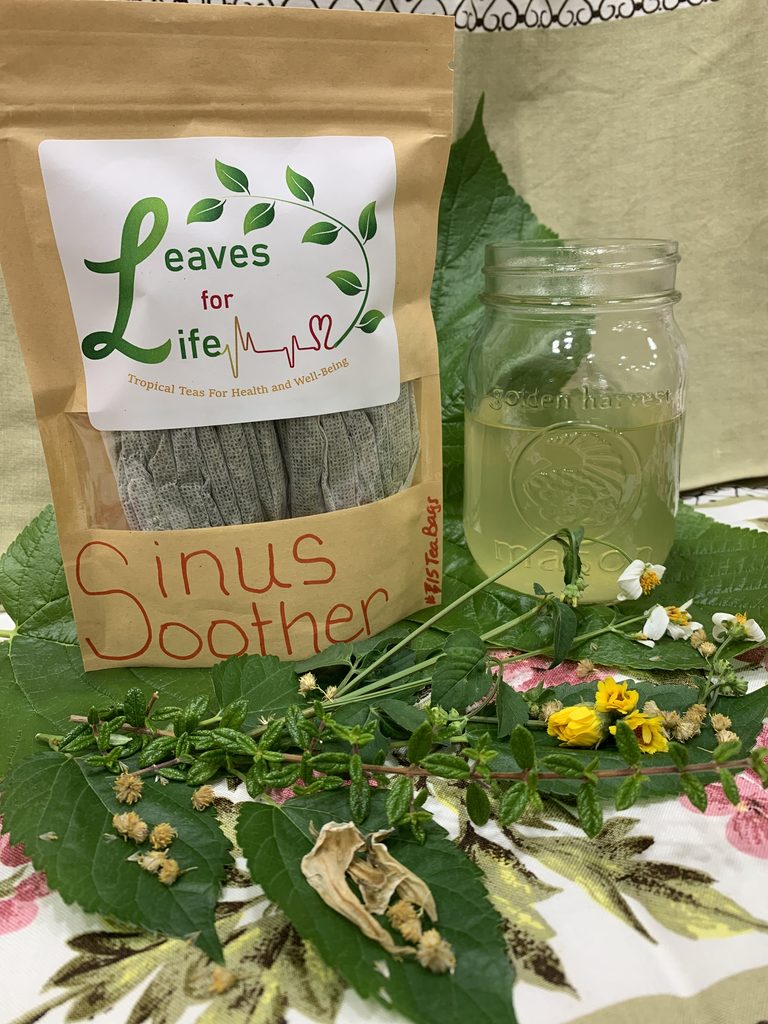
Sinus Soother
Blended with Mulberry leaves, Biden’s alba, Elder flowers, Moujean Tea and white Roselle hibiscus to make a very pleasant and lightly fruity infusion that is soothing to your sinuses.
Last Updated: [10/2026]