🌿Botanical Information
Family: Caricaceae
Botanical Name: Carica papaya
Common Names: Sometimes referred to as “pawpaw,” but unrelated to the North American pawpaw.
Native Range: Native to tropical America, extending from southern Mexico through Central America to Venezuela.
USDA Zones: 9b – 11
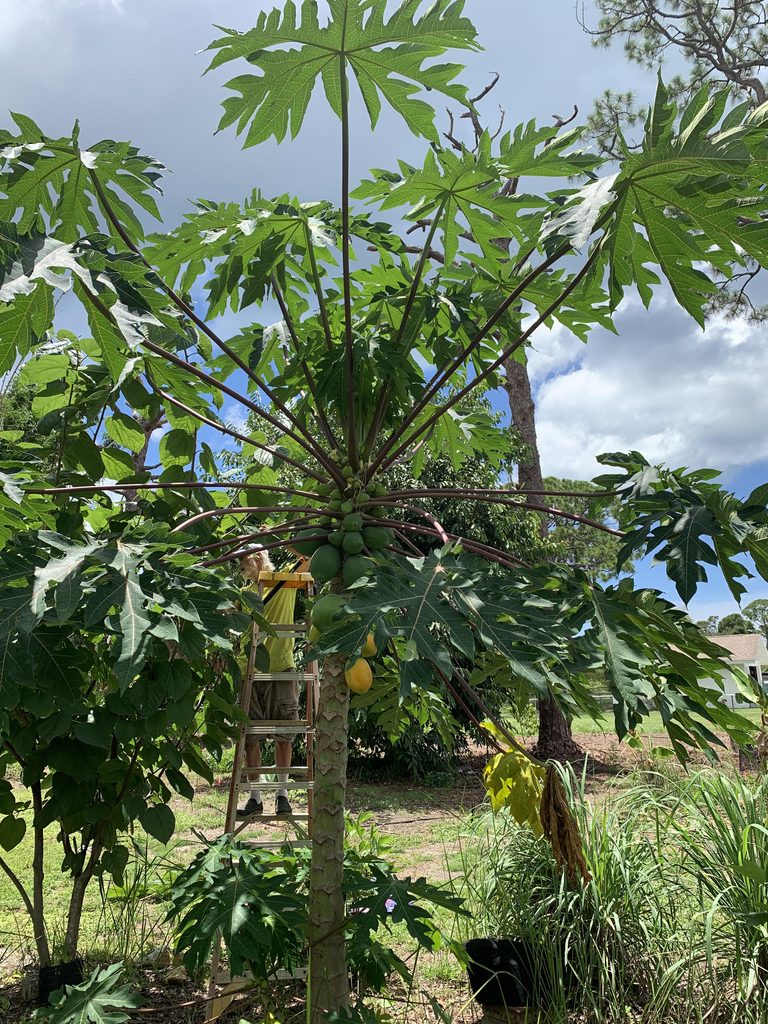
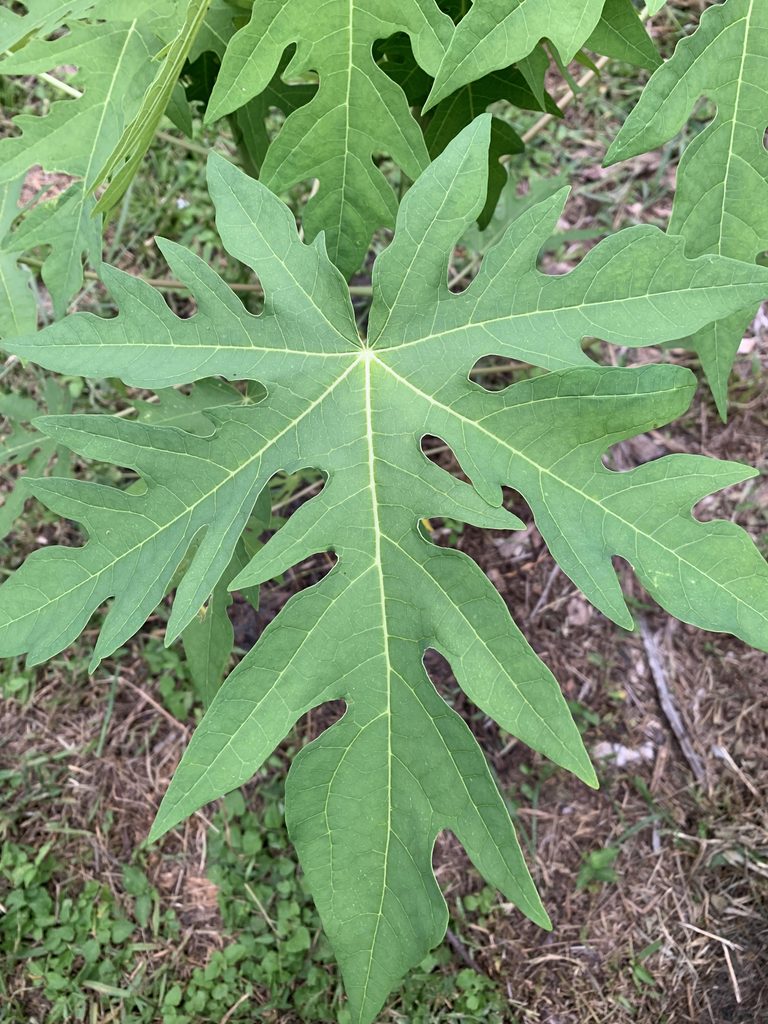
Papaya is a fast-growing, tropical, palm-like plant with a single upright, usually unbranched trunk. Its large, deeply lobed leaves form an umbrella-like crown at the top, while flowers and clusters of large green-to-yellow fruit develop directly along the upper trunk. It commonly reaches about 6–30 feet tall in warm climates.
Papaya is cultivated not only for its ripe, sweet fruit, but also for its leaves, seeds, flowers, roots, bark, and latex, which have been used traditionally in various cultures for food and herbal preparations. The leaves, in particular, have attracted considerable research interest because of their diverse nutritional and phytochemical content.
🌱 Growing in Our Food/Tea Forest
Papaya grows so easily here in SWFL; throw the seeds outside and stand in amazement as new plants will just voluntarily pop up and quickly grow. Papaya varieties can range from small, very sweet fruits with bright melon-like flavor to larger fruits with richer, more aromatic, sometimes slightly musky tropical notes. In fact, a common description of the musky variety that has actually come out of my own mouth is that they taste and smell like dirty, wet socks! I don’t necessarily enjoy the ripe fruits, but the unripe, green fruits can easily be used as a substitute for a summer squash (which is very difficult to grow in our humid climate). Green papaya has a mild flavor and crisp, firm texture, so it is used more like a vegetable than a sweet fruit: shred it for a tangy green-papaya salad, pickle or ferment it, or add cubed pieces to curries, soups, stir-fries, and stews, where it absorbs the seasonings well.
🌸 Fun Fact
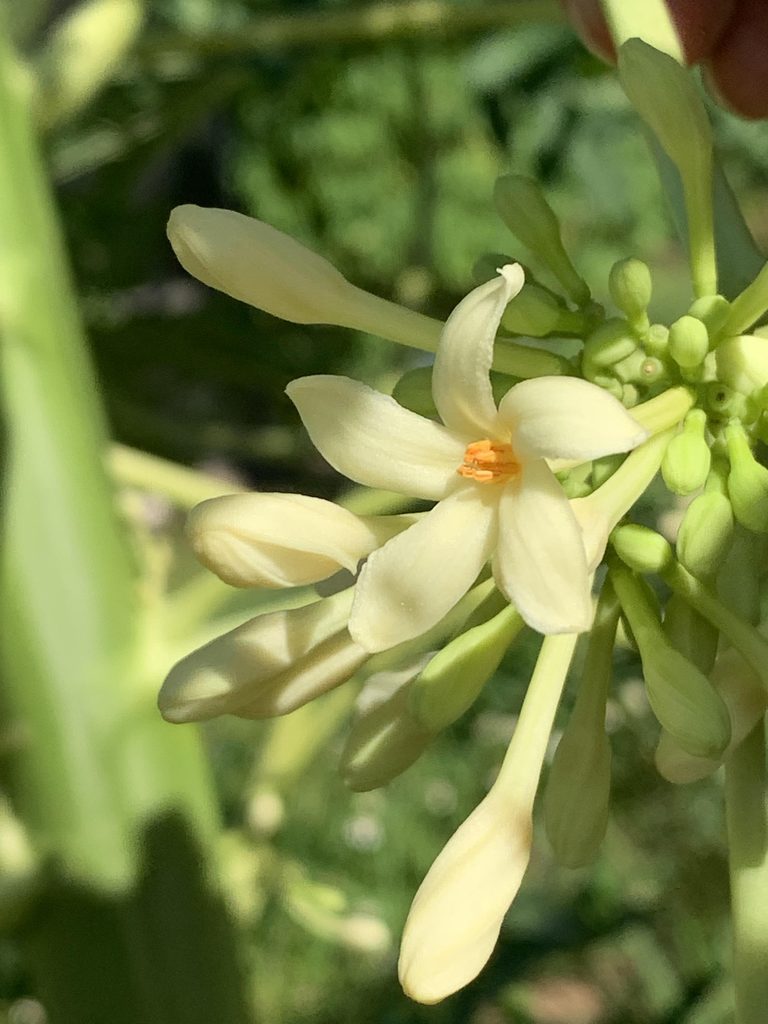
Despite being called a papaya tree, it is botanically a giant perennial herb—not a true woody tree.
Another interesting trait is that papaya plants can produce male, female, or bisexual flowers. For home fruit production, female or bisexual papaya plants are needed; a male-only plant will not set fruit. An old gardener’s tale says that tapping a nail into the trunk of a male papaya may persuade it to change its flowering habit and produce fruit. It is more folklore than dependable horticulture, but it remains one of the more entertaining bits of papaya-growing lore.
📖 Materia Medica
Parts Used
Leaves & Flowers
Note: Other parts of the papaya tree, including fruits, their peels, and roots, also have traditional and practical uses. Leaves and flowers are the parts we use in our botanical infusions.
History & Traditional Uses
Papaya has a long history of cultivation and traditional use throughout tropical America and, following its spread through early maritime trade, throughout the Caribbean and South and Southeast Asia.
Leaf teas, decoctions, and fresh juice made of papaya leaves have traditionally been used as bitter tonics for digestive complaints, fevers, and general convalescence; they are particularly well known in regional folk practices connected with dengue- and malaria-related fevers.
🥬 Food & Nutrition
Papaya leaves and flowers are valued as both traditional food plants and sources of plant nutrients. The leaves contain dietary fiber, vitamins, minerals, carotenoids, polyphenols, and other plant compounds, with nutrient levels varying according to growing conditions, maturity, and preparation. Young papaya leaves can be cooked and eaten as a leafy vegetable, while the flowers are also used as a food in some cultures, typically cooked as part of savory dishes.
Constituents
Papaya contains a wide variety of naturally occurring plant compounds. Research has identified numerous phytochemicals throughout the plant, including:
- Papain enzymes
- Flavonoids
- Phenolic acids
- Glucosides
- Alkaloids
- Tannins
- Saponins
- Carotenoids
- Vitamins and minerals
- Lycopene
- Fiber
- Other compounds currently being investigated
Actions & Properties
Traditional herbal literature and modern research have associated or investigated a number of properties of Carica papaya, particularly the leaves:
- Anti-inflammatory
- Antioxidant
- Antimicrobial
- Antiparasitic
- Digestive / bitter tonic
- Hepatoprotective
- Immunomodulatory
- Antimalarial
- Hypoglycemic
- Diuretic
These terms represent areas of traditional use and scientific investigation, with the strength of evidence varying considerably from traditional experience to laboratory, animal, and human studies. The research section below provides more detail about some of the better-studied areas.
🔬 Modern Research
Research on Carica papaya leaves includes laboratory studies, animal research, clinical trials, and several comprehensive reviews. Much of the research has focused on antioxidant and anti-inflammatory activity, traditional use in dengue-associated thrombocytopenia, nutritional composition, and the plant’s many phytochemicals. Evidence varies considerably depending on the preparation used. The research is extensive enough that rather than trying to list every study, this section highlights several comprehensive reviews and individual studies that provide a useful starting point for exploring the subject further.
1. Carica papaya L. Leaves: Deciphering Its Antioxidant Bioactives, Biological Activities, Innovative Products, and Safety Aspects
This comprehensive review brings together research on the chemistry, nutritional components, biological activity, and safety of papaya leaves. Researchers identified numerous compounds including flavonoids, phenolic acids, alkaloids, enzymes, vitamins, minerals, and other phytochemicals. The review discusses antioxidant, anti-inflammatory, antimicrobial, antidiabetic, and other areas of investigation, while also emphasizing that much of the evidence comes from laboratory and animal studies or concentrated leaf preparations. It is a particularly useful starting point for understanding both the potential benefits and limitations of papaya-leaf research.
2. Therapeutic Application of Carica papaya Leaf Extract in the Management of Human Diseases
This review examines research on papaya leaf extracts, including anti-inflammatory, antioxidant, antidiabetic, antiviral, antibacterial, and anticancer activity. The authors found promising results in laboratory and animal studies and reviewed clinical research involving papaya leaf preparations, particularly in dengue fever. The authors also point out that more well-designed clinical trials are needed before therapeutic claims can be firmly established.
3. Anti-inflammatory Activities of Ethanolic Extract of Carica papaya Leaves
In this animal study, researchers tested an ethanolic extract of papaya leaves in several established models of inflammation. The extract reduced swelling and other inflammatory responses in the treated animals, although higher doses caused some mild irritation to the stomach lining. The study provides experimental support for the traditional reputation of papaya leaves as an anti-inflammatory botanical.
4. Nutritional, Phytochemical, and Antimicrobial Properties of Carica papaya Leaves: Implications for Health Benefits and Food Applications
This newer 2025 study looked specifically at the nutritional and phytochemical composition of papaya leaves. Researchers found substantial amounts of protein, carbohydrates, fiber, minerals, phenolic compounds, flavonoids, and tannins, along with measurable antioxidant activity. Laboratory testing also showed antimicrobial activity against several bacteria. These findings help support papaya leaves not only as a traditional botanical, but also as a potentially useful food ingredient.
5. Carica papaya L. Leaf: A Systematic Scoping Review on Biological Safety and Herb-Drug Interactions
This systematic review is especially useful for understanding the safety side of papaya-leaf use. It examined 41 clinical and preclinical articles, including studies of adverse effects, toxicity, and possible herb-drug interactions. Short-term use of papaya leaf juice or standardized aqueous extracts was generally well tolerated in adults, while the authors identified concerns regarding long-term use, pregnancy, liver impairment, and several potential medication interactions.
An Additional Area of Research: Dengue
Papaya leaf preparations have also been studied in connection with dengue-associated thrombocytopenia, a condition associated with abnormally low platelet levels. Several controlled clinical studies have reported faster increases in platelet counts among people receiving papaya leaf extract or juice. However, the preparations used in these studies were concentrated extracts or fresh leaf juice—not a simple botanical tea—and researchers have noted that the clinical significance of the platelet increase remains uncertain. More rigorous research is needed before conclusions can be drawn about its usefulness in treating dengue.
As I discover additional research and useful references, I will continue adding them to this page.
⚠️ Safety
Papaya leaves and flowers have a long history of use as food and in traditional preparations. It is important, however, to distinguish ordinary culinary use and a mild botanical infusion from concentrated leaf juices, extracts, capsules, and other preparations used in research.
The amount of papaya leaf used in our botanical infusions is small and is combined with other plants; our tea is not equivalent to a concentrated papaya-leaf extract or medicinal preparation. Nevertheless, because research on papaya leaf has identified potential safety concerns with concentrated preparations, we include the following information for completeness.
Allergy: People with an allergy to papaya, latex, or papain should avoid papaya preparations. Papaya contains latex-associated proteins and enzymes that can cause allergic reactions in susceptible individuals.
Pregnancy: Avoid medicinal or concentrated papaya-leaf preparations during pregnancy. Animal research raises reproductive-safety concerns, and there is not enough reliable human safety information to establish that medicinal use is safe.
Liver impairment: People with liver disease or a history of liver injury should avoid concentrated papaya-leaf preparations unless advised otherwise by a healthcare professional. Safety reviews have identified potential concerns with liver effects, particularly with more concentrated or prolonged use.
As with any herbal product, anyone who takes prescription medications, has a chronic medical condition, or is pregnant or nursing should consult a qualified healthcare professional before using medicinal or concentrated herbal preparations regularly.
🍵 Featured In
Leaves for Life, LLC currently uses papaya leaves in just one of our botanical infusions:
Inflam-Ease
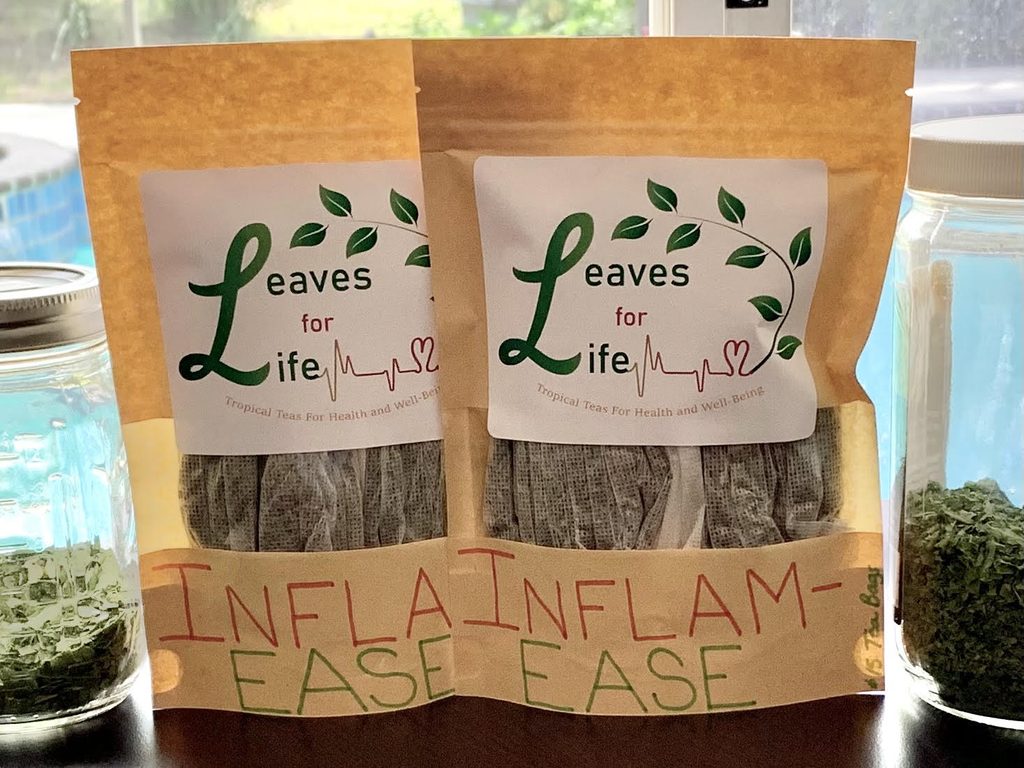
Papaya leaf is included in Inflam-Ease for its naturally occurring flavonoids, phenolic compounds, and other plant constituents that have been studied for their antioxidant and anti-inflammatory activity. It complements the other botanicals in the blend while adding its own distinctive green character. so adds a complementary botanical note to this thoughtfully balanced blend.
Last Updated: [10/2026]